Step 01
Sift
Sift 3 g through a small sieve, about a heaped teaspoon. This is the step everyone skips, and it is the one that kills the clumps.
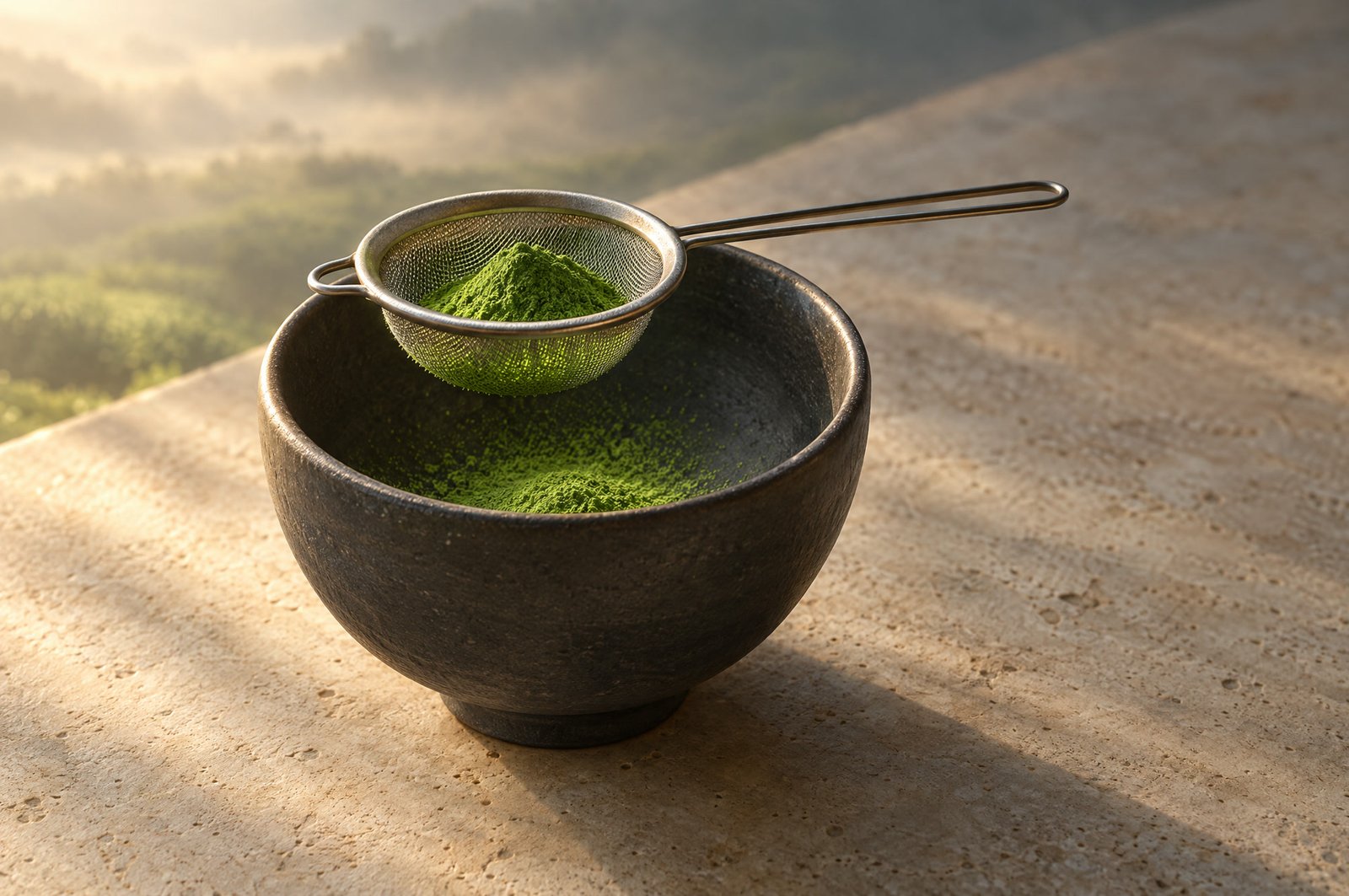
Sunlight makes tea bitter.
So we take the sun away.
Twenty-one days under cloth.
The leaf turns sweet in the dark.
Ceremonial matcha from Kagoshima. Shade-grown, single origin.
Ceremonial matcha from Kagoshima. Shade-grown twenty-one days, single origin.
Choose your sizeSingle origin / Kagoshima, Japan
One field. One harvest. Ground fine enough to disappear into water.
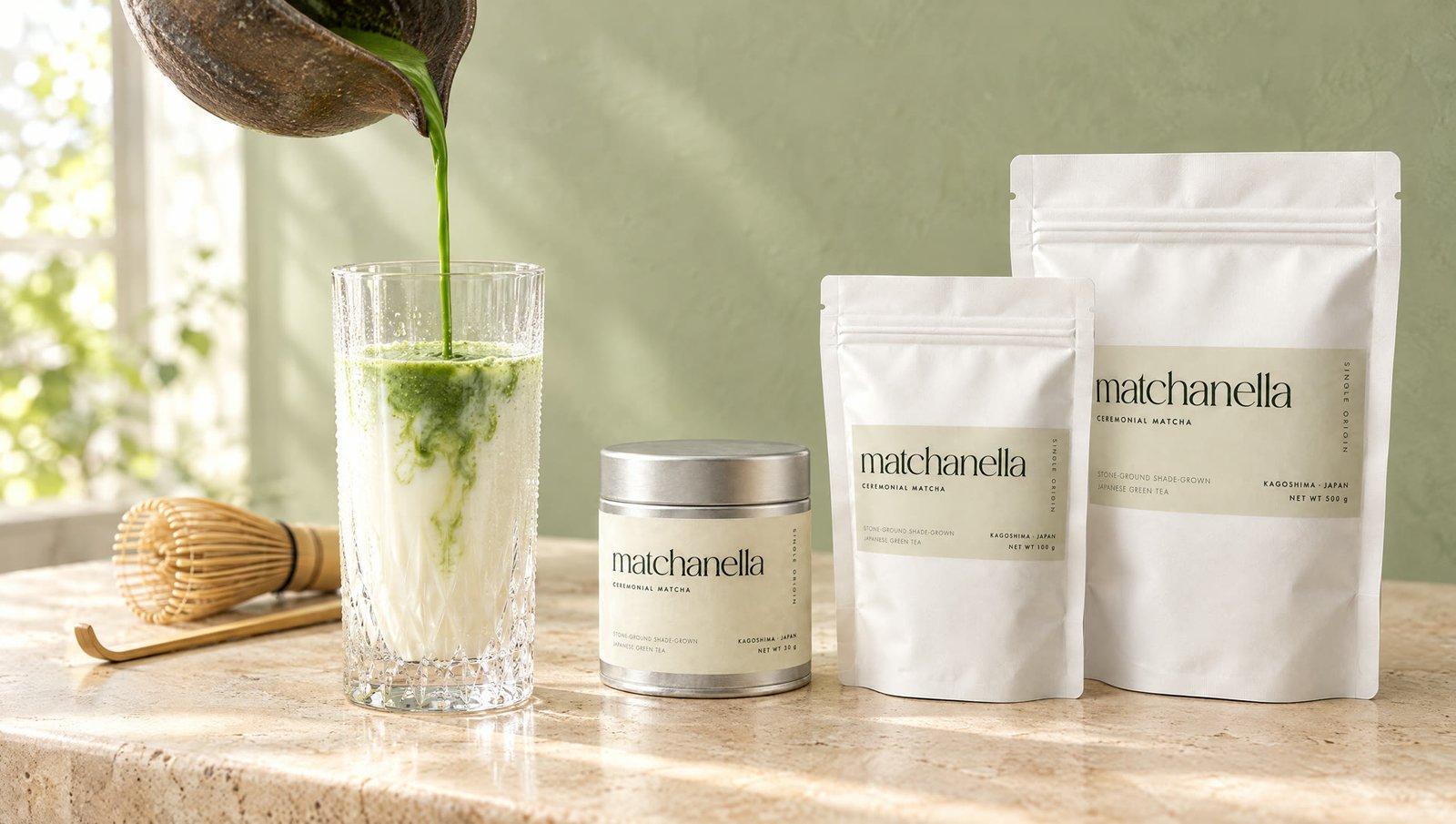
Why it is not bitter
Tea left in full sun builds up the compounds that taste sharp. Put it under cloth and the leaf slows down. It keeps its amino acids and its sweetness instead. That is the whole trick. It is also why your matcha should never taste like a lawn.
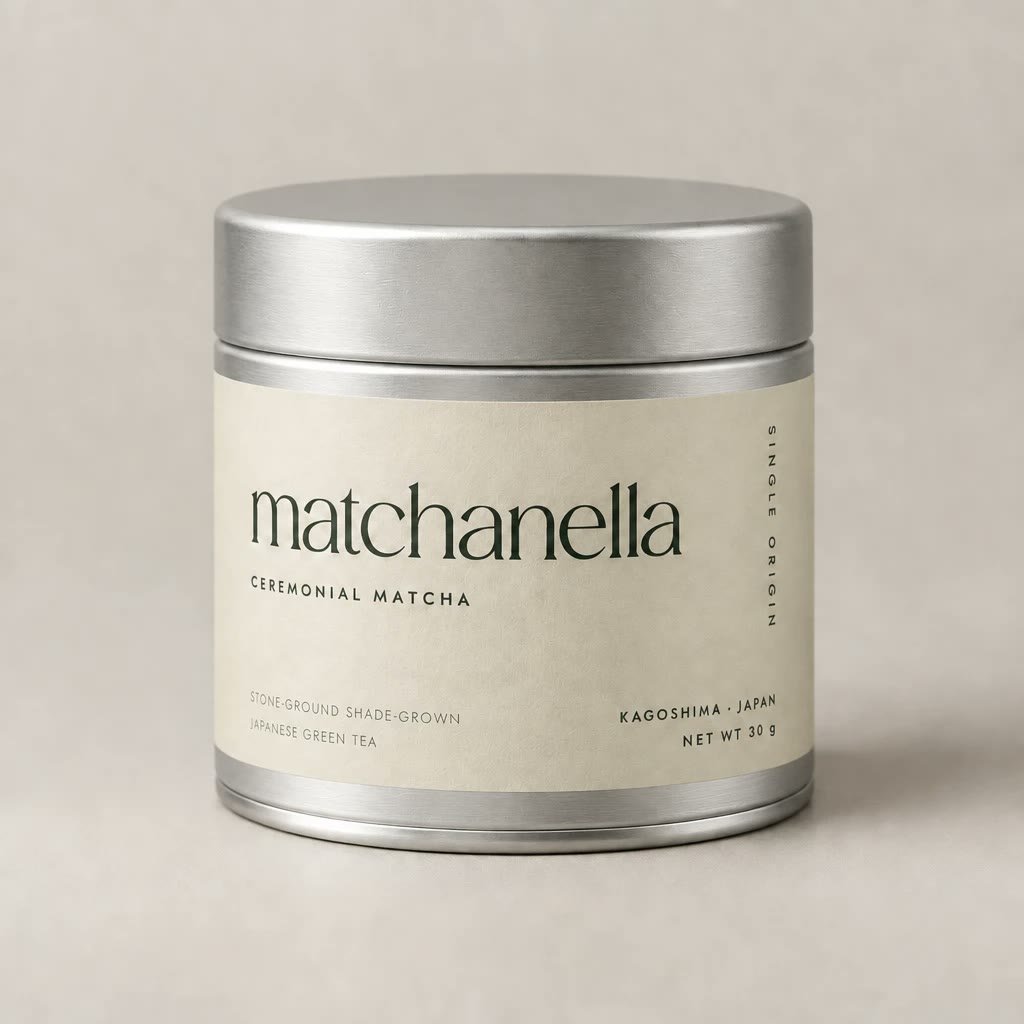
Twenty-one days
Press and hold. Watch the leaf go dark.
The part a grade cannot tell you
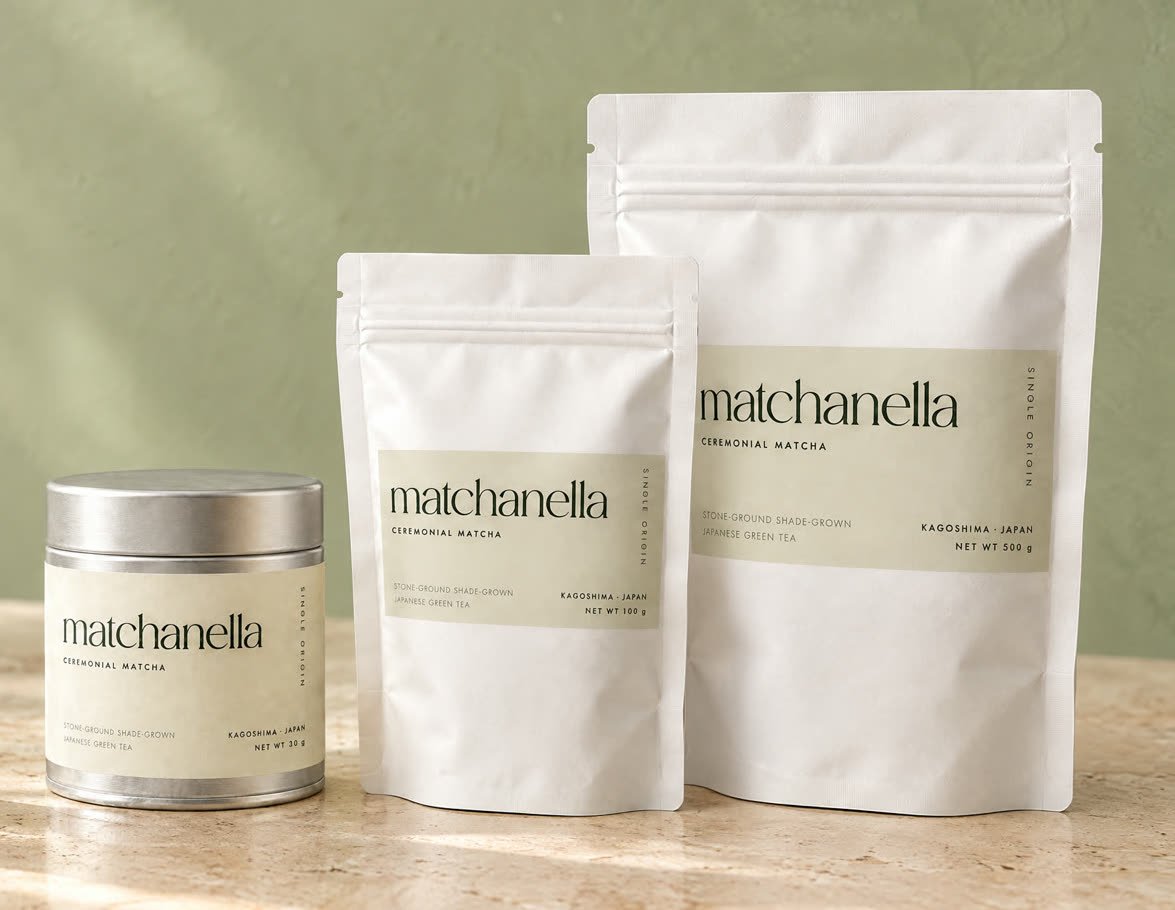
Anyone can print the word ceremonial on a bag. These are the things they would have to prove.
Ninety seconds
Sift 3 g through a small sieve, about a heaped teaspoon. This is the step everyone skips, and it is the one that kills the clumps.
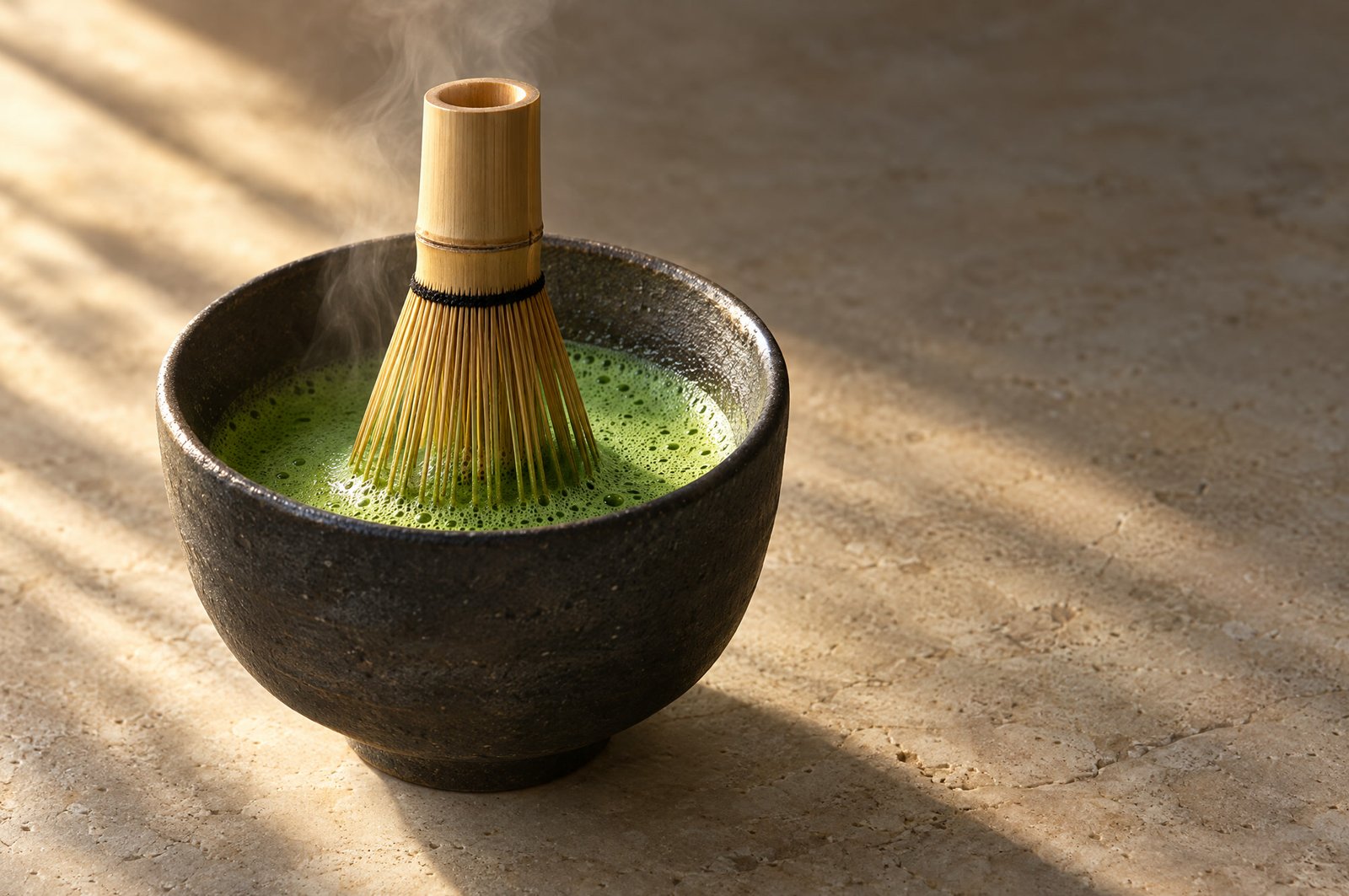
Add 30 ml of water just off the boil, around 70 degrees. Whisk in a W, not a circle, until the top holds a foam.
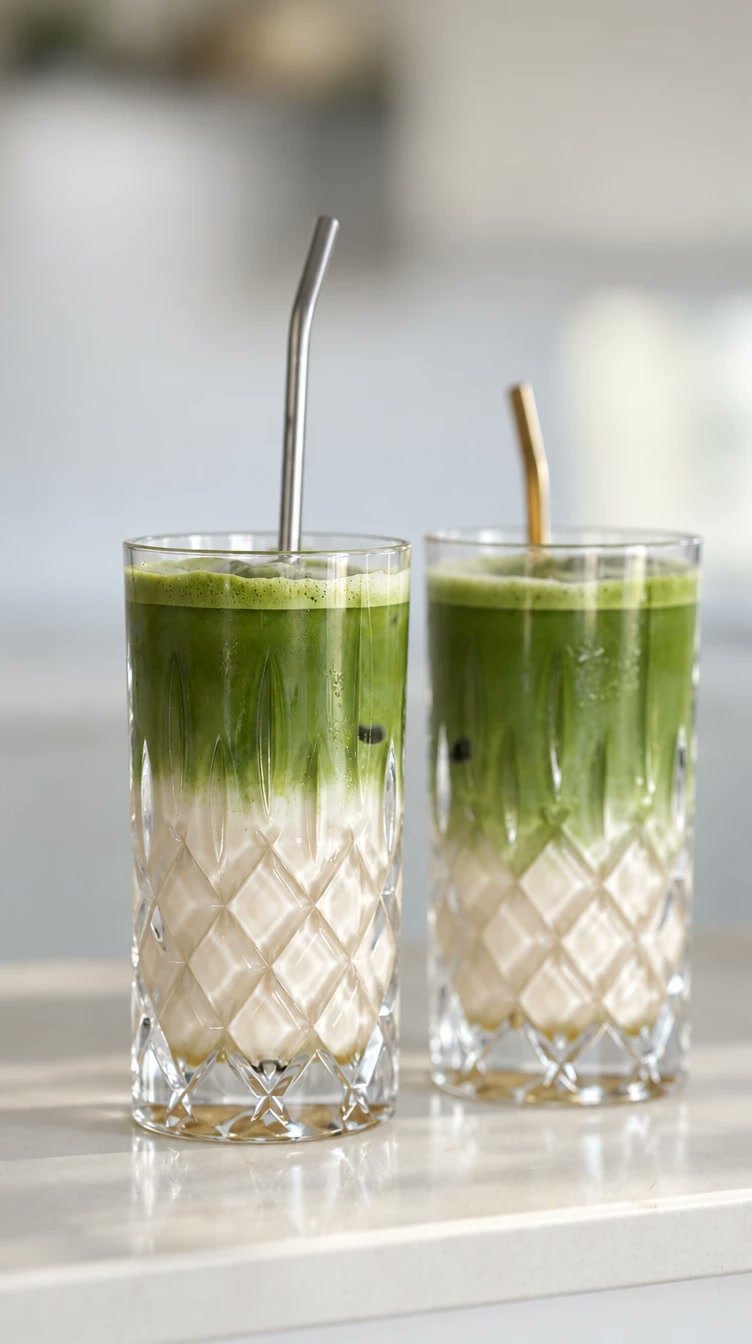
Drink it straight, or pour it over cold milk and ice.
No bamboo whisk yet? A small milk frother gets you most of the way. Start there and buy the whisk later.
Three sizes
Ten cups at three grams. The one to start with.
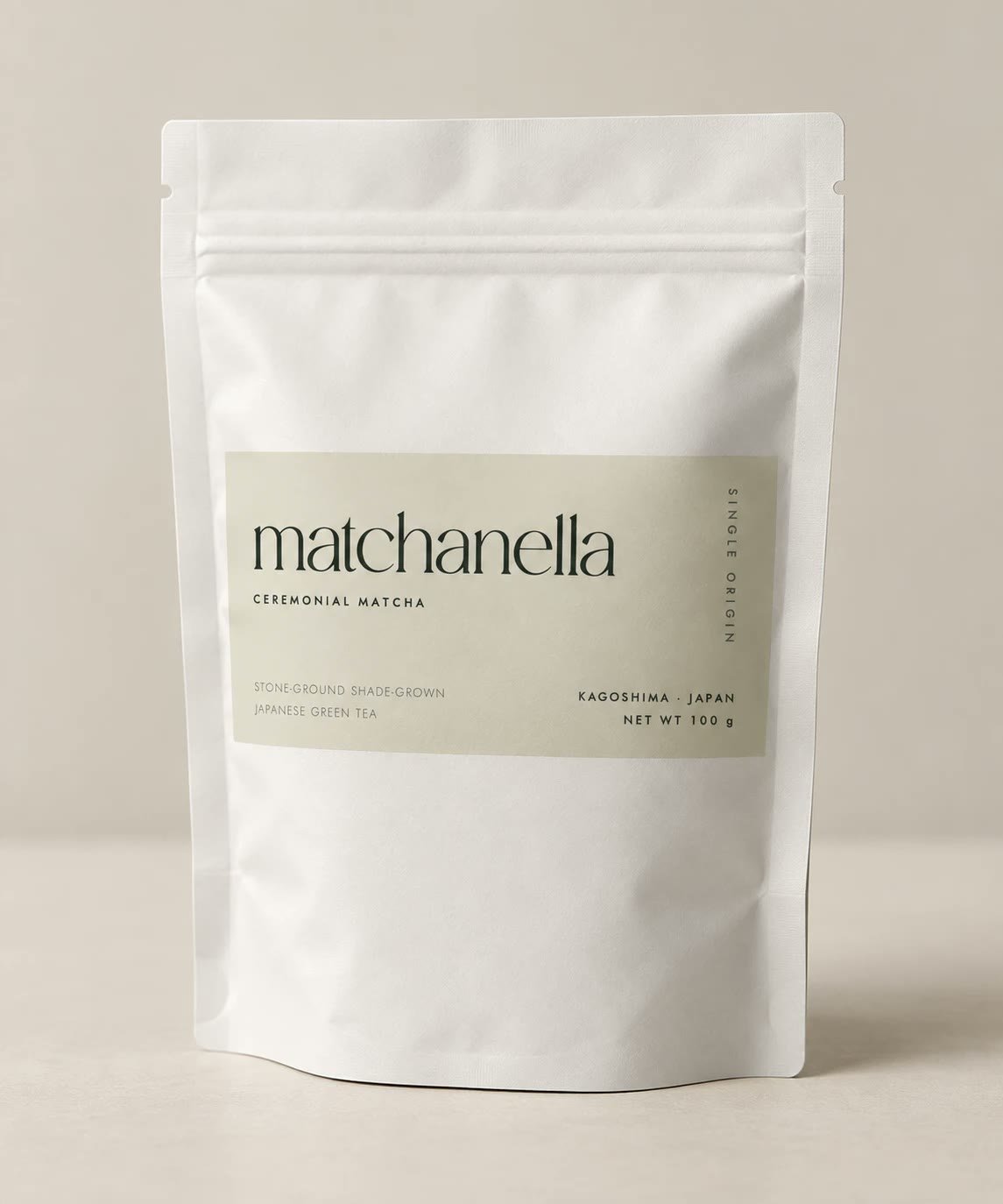
For the daily habit, once you have one.
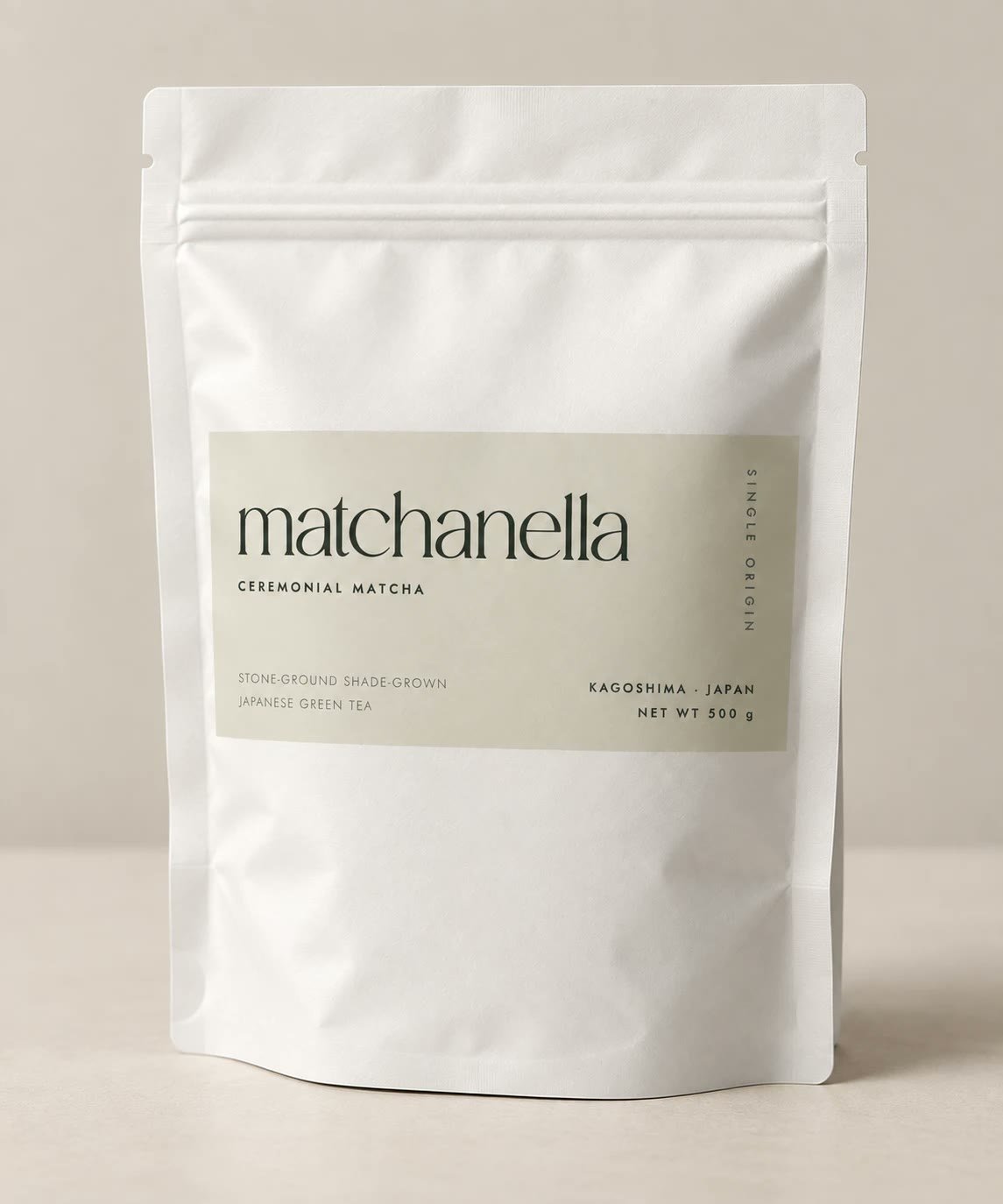
Once you know you drink it every day. The lowest price per cup.
Cup prices are worked out at 3 g, the amount in the three steps above. Prices include VAT. Shipping is €4.90 per order, however much you buy.
Buying guides warn that a big bag means old stock, and they are usually right. Ours is not a different tea in a bigger bag. It is packed from the same first flush as the 30 gram tin, nothing older. Buy the size you will finish inside two months, keep it sealed and cold, and the size stops mattering.
Two other ways to buy
The same tea from the same harvest. These two exist because a single pouch cannot do what they do.
30 g tin + 100 g pouch
100 g pouch, every month
Cup prices are worked out at 3 g, the same as above. The old price is what the same tea costs bought separately. Prices include VAT. Shipping is €4.90 per order; the Monthly plan includes it.
The rule from the sizes above still holds: matcha fades at about two months once it is open. At three grams a cup the Explorer is forty-three cups, which is six weeks of most people's drinking. The Monthly is a hundred grams, thirty-three cups, which is a cup a day for a month — it arrives as the last one runs out, and you can stop it whenever you like.
Cafés, shops and offices buy on different terms. Tell us what you go through and we will quote you.
What is actually in the cup
Three grams carry roughly half the caffeine of a cup of filter coffee. The shade also raises the leaf’s L-theanine — the amino acid behind the sweetness and the broth-like depth. It is a flavour compound first. How the cup sits with you is yours to find out; we would rather you tasted it than read about it.
How to judge any tin, not just ours
Cover the field before picking and the leaf slows down. It holds on to the amino acids that taste sweet and savoury instead of building the ones that taste sharp. Good matcha sits under cloth for roughly three weeks. A seller who will not give you the number is giving you an answer anyway.
First flush means the youngest leaves of the year. Then the stems and the veins come out — the step that separates leaf destined for matcha from leaf destined for ordinary green tea. Both cost money, so both are where corners get cut.
Fine enough to stay in the water rather than sink to the bottom; the figure usually quoted is five to ten microns. And milled powder fades. Colour, smell and sweetness all go within about two months of opening, which is why a cheap tin that is fresh beats an expensive one that is not.
Widely repeated, still wrong
Organic certifies how the field was farmed, not how the tea tastes. It says nothing about shading, harvest or leaf selection, which are the three that decide it. A certified organic late harvest will lose to a non-organic first flush, and the other way round. Judge on the growing facts, and treat organic as the separate question it is.
Nobody defines it. Not an authority in Japan, not one in the EU, not one in the United States. Japanese producers selling at home do not use the phrase at all — it travels with exports. Anyone may print it on anything, and plenty do.
This comes from the tea ceremony, where metal is avoided by custom rather than by chemistry. Matcha meets steel repeatedly on its way into the tin. What actually spoils it is air, moisture, heat and light. Use a bamboo scoop because you like the ritual, not because a teaspoon will hurt the tea.
They are not. Matcha starts as tencha: shaded leaf, steamed, dried, stems and veins removed, then milled. Ground sencha is sun-grown leaf put through a mill — cheaper, duller, sharper. In Japan the word stays with tencha; elsewhere it travels more freely, which is why a label that says only “green tea powder” has usually answered the question.
Half right, and the wrong half costs you the tin. A sealed pack survives the freezer well. An opened one does not: cold powder meeting warm air collects moisture, and matcha takes on water and smells readily. Freeze sealed packs, let them reach room temperature before opening, and keep the open tin in a cool dark cupboard.
The questions people actually ask
You should not, on the word alone. Believe the facts instead: Kagoshima, twenty-one days under cloth, first flush. If a seller will not tell you those three things, walk.
It should not. Bitterness in matcha usually comes from sun-grown leaf, water that was too hot, or powder that has sat open too long. Sift it, keep the water off the boil, and close the tin.
No. A small milk frother works, and so does a jar with a tight lid. The whisk makes a better foam, so buy one when you know you will keep drinking it.
About two months at its best. Matcha does not spoil, it fades. Keep it sealed, cool, and away from light.
Roughly half a cup of filter coffee, at three grams. If you are coming from coffee, that is a smaller dose than you are used to.
Almost certainly. At three grams a cup it holds over a hundred and sixty cups, far past the two months it stays at its best. It makes sense where several people drink it daily. Start with the tin.
Coffee is glare. This is shade.
Thirty grams. Ten cups. If it tastes like a lawn, we have failed and we want to hear about it.
Choose your size